TODAY’S SMART DRIVING LICENSES DISPATCHED TO VARIOUS TRANSPORT OFFICES AND THEIR QUANTITIES.
Driving license printing in Nepal has been a topic of public concern for many years, mainly due to delays, system inefficiencies, and growing demand. A driving license is an essential legal document that allows individuals to operate vehicles and serves as an important form of identification. In Nepal, the responsibility for issuing and printing driving licenses lies with the Department of Transport Management (DoTM).
Background and Process
In Nepal, after passing the written and trial (practical) exams conducted by DoTM, applicants receive a temporary license (often called a “pink slip”). The smart card driving license, which is the official and permanent version, is printed later. This smart license contains biometric data, a digital photograph, and embedded security features, making it more durable and secure compared to the older paper-based licenses.
Introduction of Smart Licenses
The government introduced smart driving licenses to modernize the system and align with international standards. These licenses are machine-readable and help in reducing fraud, duplication, and misuse. The smart card system also integrates with digital databases, allowing traffic police and other authorities to verify information quickly.
Problems and Challenges
Despite modernization efforts, Nepal has faced significant challenges in driving license printing:
- Long Delays: One of the biggest issues is the delay in printing and distributing smart licenses. Applicants often wait several months, sometimes even years, to receive their licenses.
- Backlog of Applications: Due to high demand and limited printing capacity, a large backlog of pending licenses has accumulated over time.
- Technical Issues: Problems with software systems, server downtime, and data management have contributed to delays.
- Limited Infrastructure: Printing is centralized, and the lack of adequate printing machines and skilled manpower affects efficiency.
- Outsourcing and Procurement Issues: At times, delays in procurement of printing materials (like smart cards) and outsourcing processes have slowed down production.
Government Efforts and Improvements
The government, through the Department of Transport Management, has taken several steps to address these challenges:
- Increasing Printing Capacity: Additional printing machines have been installed to speed up production.
- Decentralization Efforts: Plans to allow printing at provincial or regional offices have been discussed to reduce pressure on central offices.
- Online Application System: The introduction of online forms and appointment systems has made the application process more streamlined.
- Bulk Printing Drives: The government occasionally conducts mass printing campaigns to clear backlogs.
- Integration with Digital Systems: Efforts are ongoing to improve database management and integrate license data with other government systems.
Current Situation
In recent years, the situation has gradually improved, but delays still exist, especially during peak application periods. Many applicants continue to rely on temporary licenses while waiting for their smart cards. However, the shift toward digitalization and system upgrades indicates positive progress.
Importance of Efficient License Printing
Efficient and timely printing of driving licenses is crucial for several reasons:
- Legal Compliance: Drivers must carry valid licenses to avoid penalties.
- Road Safety: Proper licensing ensures that only qualified individuals are allowed to drive.
- Public Trust: A smooth system builds confidence in government services.
- International Recognition: Smart licenses help Nepalese drivers meet international standards.
Conclusion
Driving license printing in Nepal reflects both the challenges and progress of public service delivery in a developing country. While the introduction of smart licenses is a significant step forward, issues such as delays, backlog, and system inefficiencies still need to be fully resolved. Continued investment in technology, infrastructure, and management reforms will be essential to ensure a faster, more reliable, and citizen-friendly licensing system in Nepal.
source facebook page hello yatayat bivag.
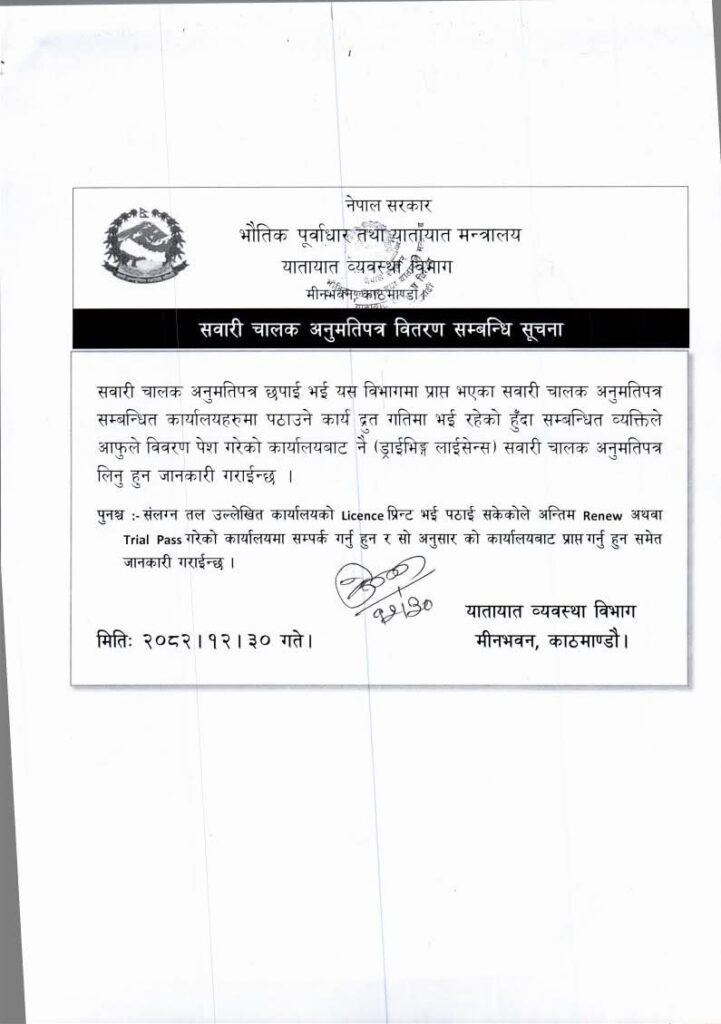
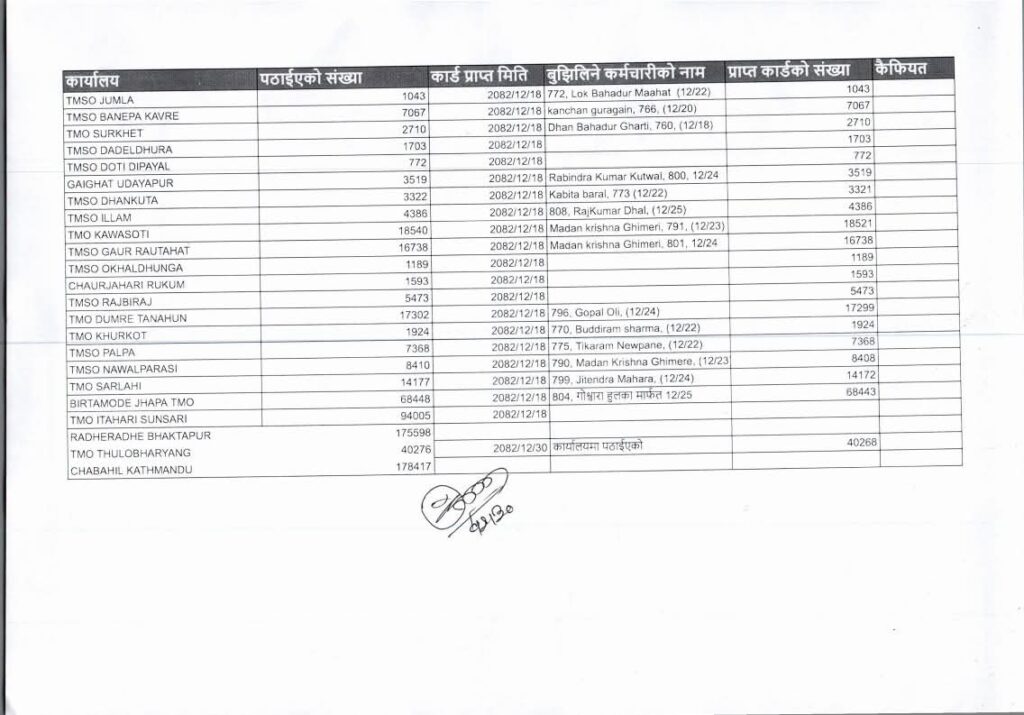

TODAY 2081-11-13 PRINTED NEPALI DRIVING LICENSE SAMRT CARD.

Today 2082-03-13 Printed Nepali Driving Smart Card In Nepal.
). - Choose the desired service (new license, renewal, or smart card conversion) and submit required personal details, documents, and fees. ### 2. **Document Verification** - Visit the transport office as per your scheduled date. - Submit necessary original documents (citizenship, old license if applicable, etc.). - The office verifies the details and eligibility of the applicant. ### 3. **Biometric Data Collection** - At the transport office, biometric data such as a photo, fingerprints, and signature are recorded digitally. ### 4. **License Test (if applicable)** - If it's a new license application, the applicant must pass the **written exam** and **practical driving test**. - For renewal or smart card conversion, this step may not be required. ### 5. **Card Printing Process** - Once your application is approved, the information is sent to the card printing department. - A smart card printer embeds your personal details, photo, and other information into the chip-embedded **smart driving license card**. - Printing is done in batches, depending on the transport office's queue and capacity. ### 6. **Notification and Collection** - After printing, the transport office notifies the applicant (via SMS or notice) about the card's readiness. - Applicants can collect the card by visiting the designated office with their application receipt. ### 7. **Delays in Printing (Common Issue)** - Due to a backlog or limited equipment, there might be delays in printing. Applicants are advised to check the status frequently by: - Visiting the DoTM website. - Contacting the respective transport office. Let me know if you'd like guidance on any specific part of the process!](https://merotechno.com/wp-content/uploads/2024/11/Smart-License-Nepal-200x125.jpg)
Today 2081-08-26 Printed Driving License Smart Card Namelist
About Author
